2337 Fair Lawn Dr. Suite B 64836 Carthage, MO

A brighter smile has always been associated with confidence, vitality, and a touch of class. But for many individuals, the idea of whitening their teeth is more of a deterrent than an attractive proposition. This is because past events of sensitivity, discomfort, or unpleasant outcomes have made people more cautious about cosmetic treatments, even when seeking dramatic results. Breakthroughs in dental technology have only begun to change this attitude.
Whitening treatments today are formulated to address the root causes of sensitivity while enhancing tooth color. Rather than relying on harsh methods, today’s approaches use milder formulations and techniques so people can whiten their smiles in a way that is more comfortable and reassuring.
Teeth Whitening Procedure
Knowing how the whitening process works can make the procedure less uncomfortable and more predictable. The whitening process is carefully designed to protect your teeth while whitening them. Each step of the process is designed to ensure that you get equal results, reduce sensitivity, and promote oral health throughout the procedure.
- Initial Smile Analysis: The procedure starts with an assessment of your teeth, enamel, and current restorations to determine whether you are a candidate for whitening and which technique will work best for you.
- Shade Analysis and Goal Setting: Your current tooth shade is measured and compared to your desired level of whiteness to help set a goal for the whitening process.
- Protective Preparation: Before the whitening procedure, protective layers are applied around your gums to ensure only your teeth are whitened.
- Targeted Whitening Procedure: The targeted whitening formula is applied to the teeth using specialized techniques to ensure even results and prevent irritation.
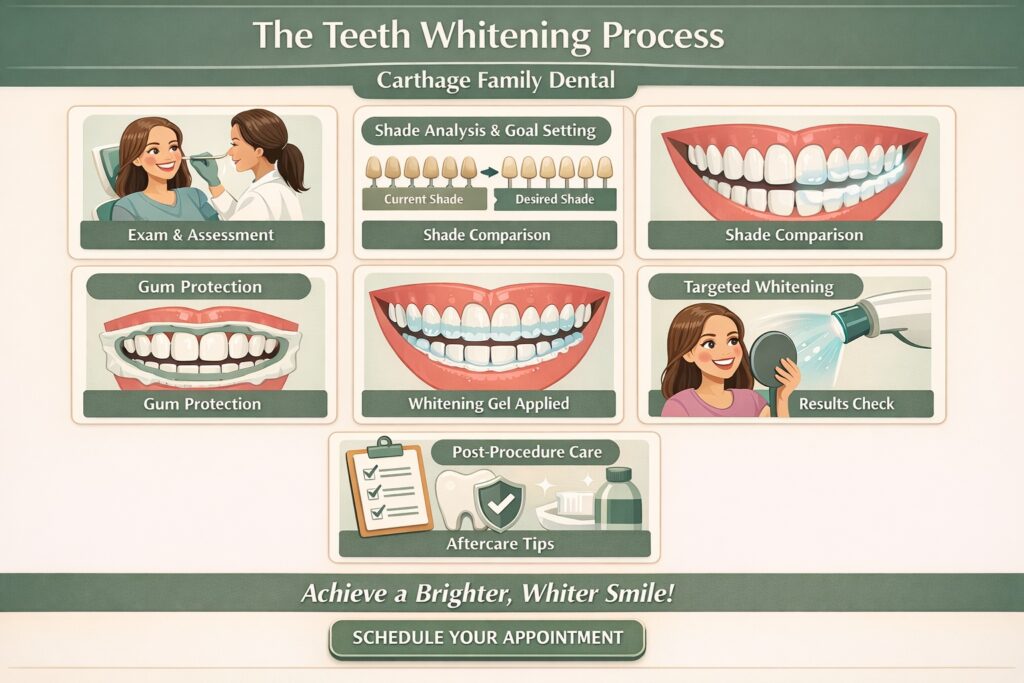
- Activation Stage: A specialized light or an extended activation time may be used to optimize the whitening process without increasing sensitivity.
- Rinse and Evaluation: The whitening formula is rinsed off, and your new smile is evaluated to determine whether the process is effective and whether additional sessions are required.
- Post-Procedure Care Instructions: You are provided with instructions on maintaining results, protecting your enamel, and avoiding habits that could affect the brightness and comfort of your smile after the procedure.
This systematic process ensures that the whitening procedure is not only successful but also gentle and controlled, tailored to your specific dental needs.
How Whitening Is Customized for Each Individual
Customization is among the greatest breakthroughs in contemporary cosmetic treatments. The second visit with a cosmetic dentist in Carthage will likely include an evaluation of how your teeth reacted to the first phase. Changes may be necessary regarding gel strength, time, or application method.
Customization ensures that:
- There is equal improvement in tooth shade.
- There is less irritation.
- There is predictable progress.
- There is a safe enamel treatment.
- The treatment process is comfortable for the patient.
Instead of trying to make teeth conform to a product, modern techniques conform to the patient.
Why Teeth Sensitivity Occurs During Whitening
Knowing the reason helps you understand why new methods are more effective. According to the American Dental Association, tooth sensitivity commonly occurs when enamel becomes thin or when gum recession exposes the underlying dentin. During whitening, products may temporarily open microscopic pathways through the enamel, allowing external stimuli like temperature changes or air to reach the nerve more easily.
Triggers for sensitivity include:
- Thin enamel or natural wear
- Recession of the gums, exposing roots
- Microscopic cracks in the teeth
- Overuse of high whitening products
- Inadequate fitting of trays or strips
Newer methods focus on avoiding these triggers rather than just treating the problem after it occurs.
How Modern Whitening Methods Enhance Comfort and Outcomes
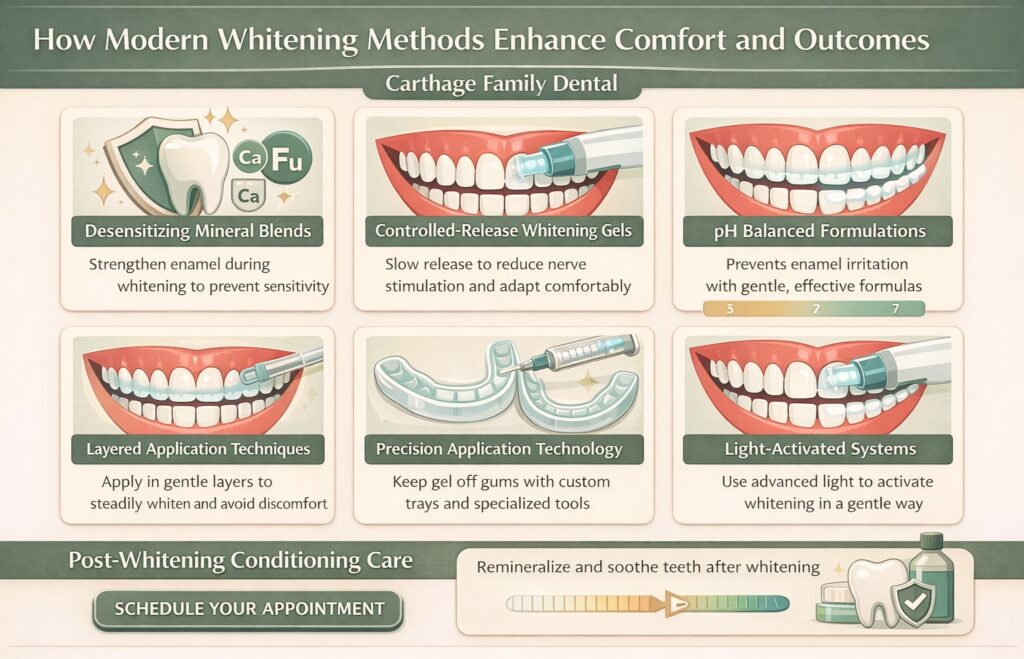
Teeth whitening has come a long way from just being a stain-removing procedure. Modern teeth whitening techniques are created to whiten teeth while protecting the enamel and reducing any sensitivity. Modern teeth whitening techniques do not just depend on powerful bleaching agents. Instead, they use a combination of proven ingredients, controlled delivery, and advanced tools to make the procedure more comfortable and predictable.
Modern whitening techniques enable gradual whitening, supporting the tooth structure while still whitening the teeth effectively.
Desensitizing Mineral Blends
Modern teeth whitening products now incorporate calcium- or fluoride-based minerals that help strengthen the enamel during the whitening process, preventing sensitivity while maintaining tooth strength.
Controlled-Release Whitening Gels
Controlled-release whitening gels release their active ingredients slowly rather than all at once, preventing sudden nerve stimulation and allowing the teeth to adapt comfortably to the whitening process.
pH Balanced Formulations
Contemporary formulations are pH-balanced to prevent enamel irritation, providing a more comfortable environment for whitening without compromising the effectiveness of discoloration removal.
Layered Application Techniques
Rather than applying a strong dose, a gentler layering technique is used over time. This helps to ensure a steady whitening process and reduces the chances of discomfort.
Precision Application Technology
Trays and specialized tools are designed to keep the whitening gel in the precise location, preventing it from contacting gums or sensitive areas.
Light-Activated Systems
Advanced light technology activates the whitening agents, eliminating the need for stronger chemicals and helping efficiently remove stains while keeping the process gentle.
Post-Whitening Conditioning Care
Remineralizing rinses or gels are commonly used after the whitening process to soothe the teeth, seal enamel pores, and maintain a comfortable environment as the teeth adjust.
Collectively, these innovations illustrate that contemporary whitening is concerned not only with aesthetic appeal but also with the health of the teeth and the comfort of the process for achieving a brighter smile.
Signs You May Benefit From a Gentle Whitening Approach
Not everyone responds equally to whitening. You may be interested in sensitivity-oriented approaches if you feel:
- A tingling sensation when consuming cold drinks
- Mild discomfort after brushing your teeth
- A history of enamel erosion
- Exposure of your gumline
- Sensitivity from past whitening attempts
A personalized evaluation will help you determine which technique best suits your needs.
Daily Routines That Help to Maintain Comfort
New whitening technologies achieve great results, but it is also important to follow daily care. Minor lifestyle changes can help achieve the desired effect and avoid irritation.
Helpful habits include:
- Using a toothbrush with soft bristles
- Avoiding highly acidic beverages immediately after whitening
- Drinking water after consuming coffee or tea
- Using toothpaste for people with sensitive teeth
- Regularly following through on routine check-ups
Even popular local traditions, such as drinking hot beverages on chilly Missouri mornings or cold beverages on hot afternoons, can affect sensitivity.
Easy Tips to Maintain Your Bright Smile
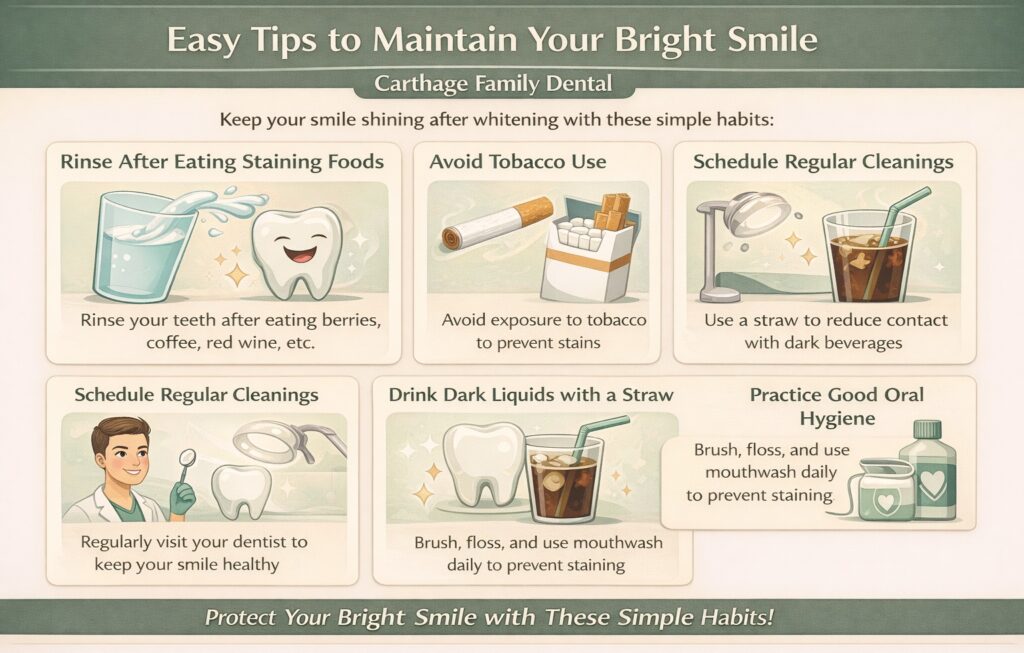
The secret to a bright smile is to maintain it after the whitening process. Some people find that these easy tips can make a big difference.
Here are some tips to maintain your bright smile:
- Rinse your teeth after eating staining foods
- Avoid exposure to tobacco
- Regularly visit your dentist for cleanings
- Use a straw when drinking dark liquids
- Adhere to proper oral hygiene practices.
A Brighter Smile Without the Sting
Whitening has evolved into a comfort-oriented cosmetic procedure that emphasizes both aesthetics and dental health. Thanks to new advancements, patients are no longer forced to decide between a brighter smile and a more comfortable smile.
At Carthage Family Dental, procedures are designed with each patient in mind, helping them move forward in confidence. Our office remains open every Friday and every other Saturday. If you have been putting off whitening because of concerns about sensitivity, a consultation appointment may be the start of a brighter, more comfortable smile.
Questions People Ask About Cosmetic Dental Treatment
1. Can whitening be done if my teeth are already sensitive?
Yes. Modern techniques focus on reducing irritation while improving color. Desensitizing ingredients, customized trays, and gradual treatment plans allow many people with sensitive teeth to undergo whitening comfortably. An evaluation helps determine the safest method and timing based on enamel condition and oral health status.
2. How long do results usually last?
Whitening longevity depends on diet, oral hygiene, and lifestyle habits. Many people maintain their brighter shade for months or longer with proper care. Avoiding stain-causing foods, keeping regular cleanings, and using recommended products can help extend results without needing frequent repeat treatments.
3. Is light-activated whitening safe for enamel?
When used correctly, light-enhanced systems are designed to be gentle. They activate whitening agents without requiring stronger chemical concentrations. This allows stains to break down efficiently while protecting enamel structure. Professional supervision ensures the process stays controlled and comfortable throughout treatment.
4. Will whitening affect dental restorations?
Whitening works only on natural tooth enamel, not on crowns, fillings, or veneers. A consultation helps identify any restorations and plan treatment so your overall smile remains uniform. Sometimes adjustments or replacements may be recommended later to match your new tooth shade.
5. How soon can I eat or drink normally afterwards?
Most people can return to normal eating soon after treatment. However, it is often recommended to avoid dark or strongly pigmented foods for a short period. This allows enamel pores to close fully and helps protect your newly brightened shade from absorbing stains.
6. Are at-home whitening kits as gentle as professional methods?
Store-bought kits vary widely in strength and fit. Some may cause uneven whitening or irritation if used incorrectly. Professional systems are customized for your teeth and monitored for comfort, making them more predictable and safer for people concerned about sensitivity or uneven results.