2337 Fair Lawn Dr. Suite B 64836 Carthage, MO

Are you in a dental emergency? Same-day emergency appointments available!
Call us: (417) 237-8090
A sudden crack or break in the tooth can be alarming. You are enjoying lunch, chatting with friends, or watching a game when suddenly you feel pain or notice a piece of enamel is missing. Tooth damage never occurs at the most convenient times, but taking immediate action can make a huge difference.
Tooth damage can occur in many situations. Biting hard foods, sports injuries, falls, or undiagnosed cavities can weaken teeth and eventually cause them to break. Being prepared for these situations can help you remain calm and minimize pain until you can visit an emergency dentist in Carthage.
Identifying the Type of Tooth Damage
Not all types of tooth damage appear the same, and identifying the type can help you address it properly. A quick observation of the damage and symptoms can give you an idea of its extent.
- Minor Chip: A small portion of the enamel is chipped away; it is usually painless but feels rough to the touch.
- Hairline Crack: Thin lines on the tooth that can be sensitive to biting or to hot or cold drinks.
- Moderate Fracture: A bigger chip that can reveal the inner layers of the tooth, which can be painful or visible.
- Deep Split: A serious break in the tooth structure that can compromise the stability of the tooth and be painful when chewing.
- Knocked-Out Tooth: A tooth that is completely knocked out of its socket, which is an emergency situation that needs immediate attention.
Even the slightest damage to the tooth should not be taken lightly. Small cracks in the tooth can develop into bigger problems, especially when chewing or grinding.
What To Do Immediately After Tooth Damage
A damaged tooth can be very painful, but there are things you can do to protect it. The key is to remain calm and follow these easy steps.
- Rinse Gently: Rinse your mouth with warm water to clean the area and remove any debris that may be lodged in your tooth.
- Save Broken Pieces: Set aside any tooth fragments, as they can sometimes be reattached.
- Control Swelling: Hold an ice pack or a bag of frozen peas against the side of your cheek to help reduce swelling.
- Protect the Area: Do not chew on that side of your mouth, and cover any sharp edges with dental wax or sugar-free gum.
- Manage Discomfort: Take any over-the-counter pain medication as needed, and keep your head elevated to reduce pressure on the area.
- Save a Knocked-Out Tooth: Pick it up by the top, rinse it gently, and place it in milk or saliva until you reach a dentist.
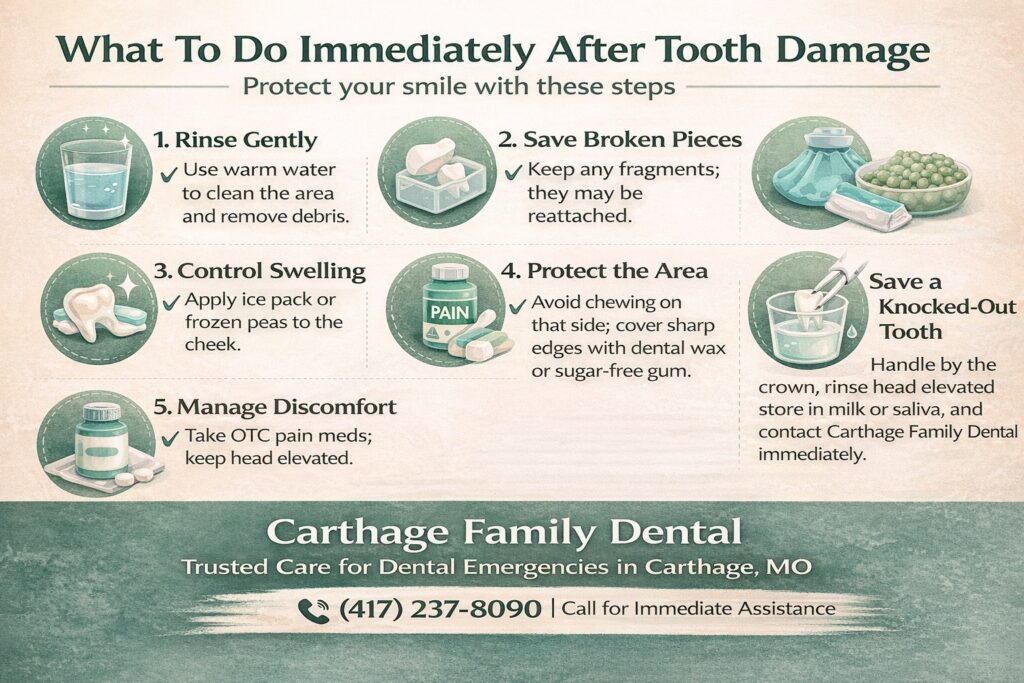
When handling a dislodged tooth, grasp the crown, not the root. Rinse it gently and put it back in your mouth if you can. Otherwise, you can put it in milk or saliva and contact an emergency dental care in Carthage as soon as possible.
Watch this short educational video to understand your treatment options and what steps to take immediately after damaging a tooth.
Video Source: Teeth Talk Girl (YouTube) – Educational video explaining what to do after chipping or breaking a tooth and available treatment options.
Symptoms That Require Immediate Attention
Some symptoms will indicate that it is not a good idea to wait before seeking medical attention. These symptoms are an indication that immediate attention is required:
- Bleeding that does not stop
- Severe pain
- Swelling around the jaw or gum area
- Sensitivity to temperature or pressure
- Exposure of the nerve
- Inability to close your mouth.
Why is Fast Treatment Important?
Teeth are living tissues that have nerves, blood vessels, and ligaments. When a tooth is damaged, it becomes susceptible to bacterial invasion. The earlier the treatment is sought, the better the chances of saving the tooth.
Fast treatment can:
- Prevent Infection from Arising: Early treatment ensures that holes in the tooth are sealed before bacteria have a chance to infect the inner tissues, thereby preventing inflammation, abscesses, and the spread of infection in the mouth.
- Ease Pain Intensity Rapidly: Early treatment of the tooth relieves pressure within the tooth and its surrounding tissues, thereby reducing pain intensity and preventing further sensitivity.
- Halt Cracks from Propagating: A small crack in the tooth can progress under chewing pressure, but early treatment helps hold the damage at bay.
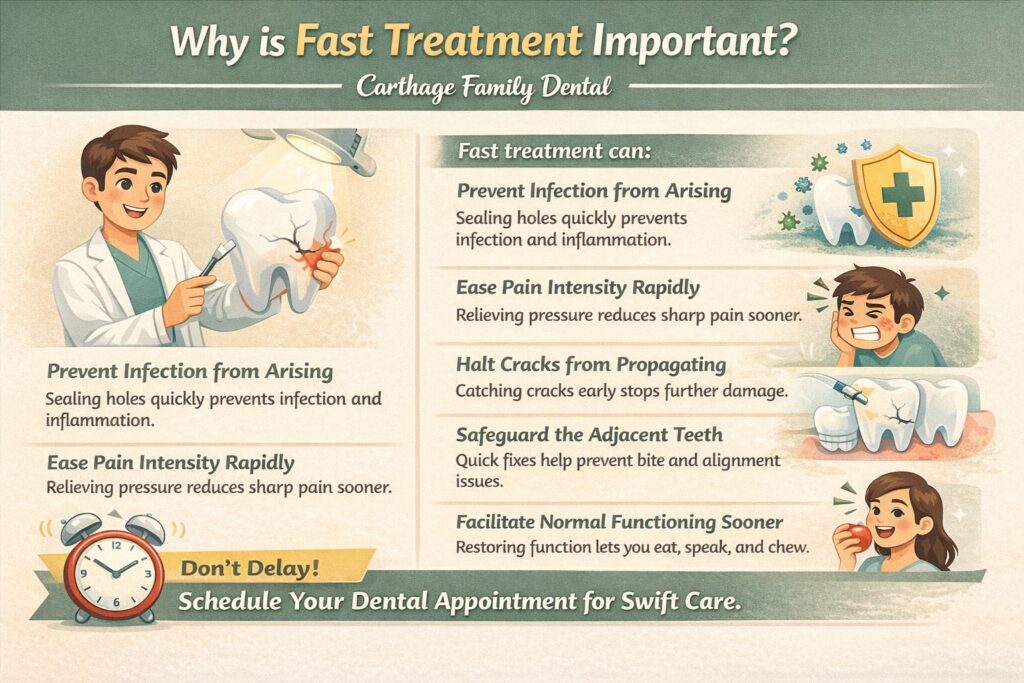
- Safeguard the Adjacent Teeth: The earlier the damaged tooth is treated, the less likely it is that the bite will be compromised, which can lead to a possible shift in the teeth that may cause stress on the adjacent teeth.
- Facilitate Normal Functioning Sooner: Early treatment helps maintain normal biting, speaking, and chewing functions sooner, enabling one to go about their normal duties without much interruption.
This is because any delay may result in a more complicated procedure, especially if the pulp is involved.
Common Causes of Tooth Injuries
Dental emergencies can occur during normal, everyday activities rather than in extreme circumstances. Many patients have reported incidents that appeared to be benign at the time.
Common causes include:
- Chewing Ice or Hard Candy: Biting down on hard objects can apply sudden pressure to the enamel, which can cause microfractures or chips, particularly if the tooth is already weakened or has had previous dental work.
- Sports Without Mouth Guards: Contact sports, high-speed collisions, or other physical activities can cause sudden tooth-to-tooth contact, leading to chips, cracks, or complete dislocation.
- Night Grinding or Clenching: Repeated pressure from grinding, even when the individual is unaware of the action, can weaken enamel and dentin, eventually leading to chips or breaks from normal use.
- Accidental Falls: Slipping, tripping, or losing balance can cause direct facial impact, even if the fall appears harmless at the time.
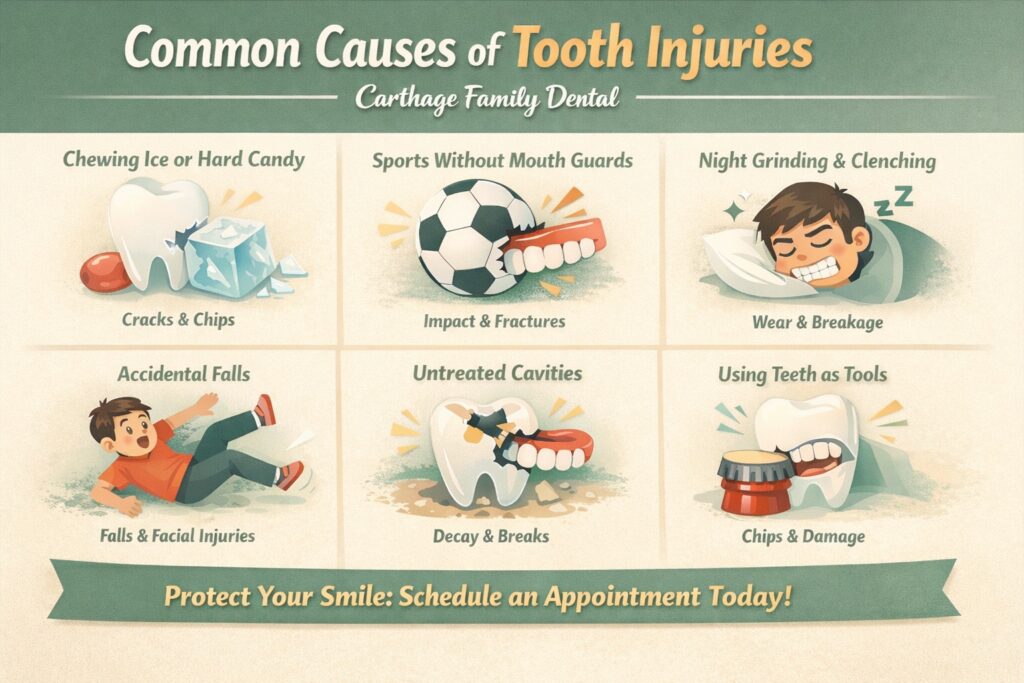
- Untreated Cavities Weakening Enamel: Tooth decay causes gradual weakening and hollowing of the enamel, making the tooth more susceptible to breaking during normal chewing.
- Using Teeth as Tools: Using teeth to open packages, bite nails, or hold objects can put undue stress on the enamel, leading to sudden chipping or breaking.
Weekend sports, outdoor activities, or local events such as festivals can increase the risk of accidental impacts or slips, especially when distractions are high.
How Treatment Fixes Damaged Teeth
The treatment will depend on the nature and extent of the damage. A professional will assess the tooth, the surrounding tissue, and the bone beneath it before deciding on the treatment.
The treatment options include:
- Bonding to fix chipped teeth
- Crowns to fix broken teeth
- Root canal treatment if the pulp is damaged
- Splints to stabilize loose teeth
- Reimplantation if a tooth is knocked out
The aim of treatment in all cases is to fix the problem, alleviate pain, and ensure good oral health.
Preventing Future Dental Injuries
Prevention is just as important as treatment. Small habits can greatly reduce the risk of tooth damage.
Protective strategies:
- Wear a mouthguard for sports
- Avoid chewing hard objects
- Treat cavities early
- Manage teeth grinding
- Maintain routine checkups
- Stay aware of your surroundings during activities
These steps help keep enamel strong and resilient against everyday wear and tear.
When Pain Is Mild But Damage Is Visible
Not all tooth damage results in pain. You may notice a crack, chip, or rough spot on the tooth without feeling pain. This does not mean that the tooth is sound.
- Hidden Structural Stress: A tooth may appear only slightly damaged, but internal layers may be under stress that could lead to a larger crack.
- Delayed Sensitivity: Pain may develop as cracks spread or reach the inner layers of the tooth.
- Bacterial Entry Risk: Even a small opening allows bacteria to enter, increasing the risk of infection.
- Chewing Pressure Danger: The pressure of normal biting forces can quickly expand a small crack.
- Sharp Edge Irritation: A rough spot on the enamel surface can irritate the tongue or cheek if left unattended.
Take Control of Your Smile with Timely Care
Injuries to the teeth can occur unexpectedly, but being prepared for the event makes the situation easier to handle. Taking immediate care of the injury can help prevent complications and alleviate discomfort. The key to saving the tooth is taking immediate action.
If you observe any damage, pain, or unusual sensitivity, call us to schedule an appointment with Carthage Family Dental. Early treatment helps heal, preserves adjacent teeth, and helps you get back to your normal life with confidence.
Questions People Ask About Dental Emergency
1. Can a cracked tooth heal on its own?
No, enamel does not regenerate. A crack may seem stable, but pressure from chewing can worsen it. Professional care is needed to seal, repair, or stabilize the tooth. Early treatment helps preserve structure and prevents bacteria from entering deeper layers where infection could develop and spread.
2. Is a chipped tooth always urgent?
Small chips without pain may not require the same-day care, but they should still be evaluated promptly. Even minor enamel loss can create sharp edges or expose sensitive areas. Assessment ensures there are no hidden cracks and helps determine whether smoothing, bonding, or protection is needed to prevent further damage.
3. What should I avoid eating after damaging a tooth?
Stick to soft foods and avoid chewing on the injured side. Hard, crunchy, sticky, or very hot and cold foods can worsen pain or enlarge fractures. Gentle eating protects the area until treatment. Drinking through a straw may help reduce sensitivity if temperature triggers discomfort.
4. How long can a knocked-out tooth survive outside the mouth?
Timing is critical. Reimplantation within 30 minutes offers the highest success rate, though teeth may sometimes be saved after longer periods if stored properly. Keeping the tooth moist in milk or saliva helps preserve the root-surface cells needed for successful reattachment.
5. Can stress cause teeth to crack?
Yes. Stress often leads to clenching or grinding, especially during sleep. Constant pressure weakens enamel and creates microcracks that may eventually fracture. Managing stress, wearing a night guard, and addressing bite alignment can reduce strain and protect teeth from structural damage over time.
6. Should I go to urgent care or a dental office for tooth injuries?
Medical urgent care centers can help with pain control and swelling, but they usually cannot repair teeth. Dental professionals have the tools and training to treat structural damage. Visiting the right provider first saves time and ensures the problem receives appropriate care immediately.