2337 Fair Lawn Dr. Suite B 64836 Carthage, MO

A toothache rarely arrives at a convenient time. It may start during dinner with family, wake you up in the middle of the night, or appear suddenly before work or school. At first, many people try to wait it out. They rinse with salt water, take pain medication, or hope the discomfort fades by morning. But some dental problems are warning signs of something more serious.
Severe pain, facial swelling, bleeding after an injury, or a damaged tooth can quickly become larger oral health problems without immediate treatment. In some situations, delaying care may increase the risk of infection, permanent tooth damage, or complications that affect overall health.
Knowing when to seek emergency dental care in Carthage can help protect your smile and prevent unnecessary pain. Here are the most common signs that should never be ignored.
What Counts as a Dental Emergency?
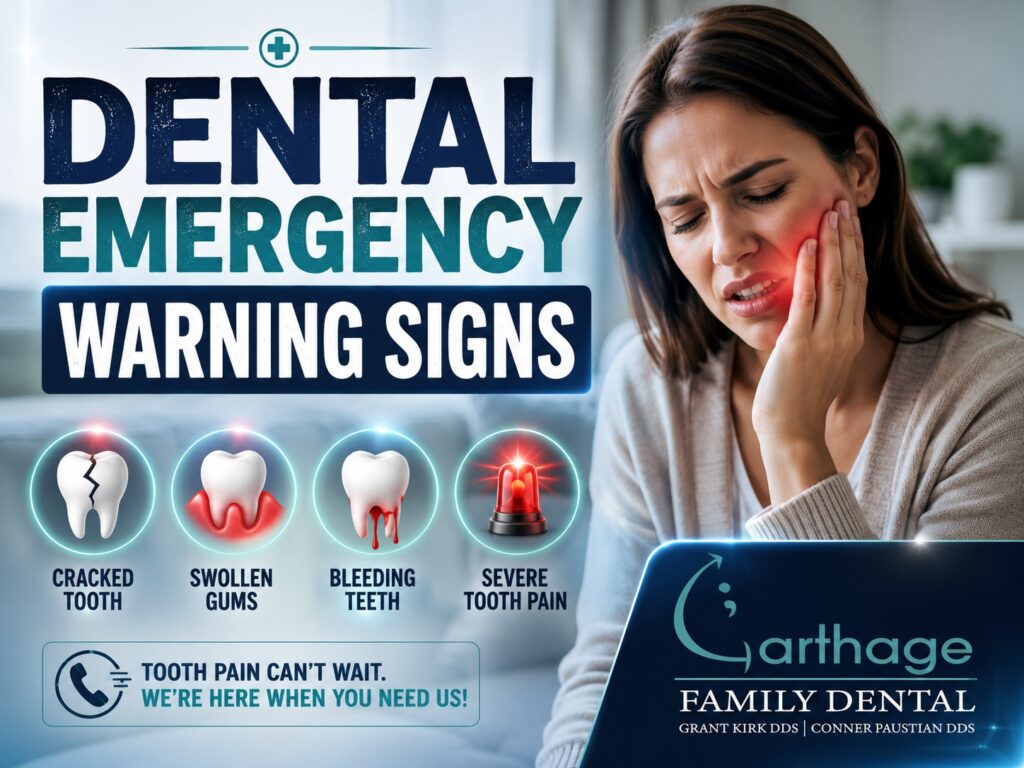
Not every dental issue requires immediate treatment. Mild sensitivity after drinking something cold or slight discomfort from food trapped between teeth may not need urgent attention. However, symptoms involving severe pain, infection, swelling, trauma, or bleeding often require fast care.
A dental emergency typically includes:
- Sudden or intense tooth pain
- A knocked-out or fractured tooth
- Swelling in the gums, face, or jaw
- Bleeding that does not stop
- Signs of an oral infection
- Severe sensitivity to pressure or biting
- Injury affecting teeth or soft tissues
Many people delay treatment because the pain temporarily disappears. Unfortunately, pain fading does not always mean the problem is gone. In some cases, it may indicate nerve damage or worsening infection. This is why a visit to an emergency dentist in Carthage is recommended.
Severe Tooth Pain That Should Never Be Ignored
A lingering toothache is one of the most common reasons people contact an emergency dentist Carthage residents trust. While occasional sensitivity may not be serious, sharp or throbbing pain usually signals an underlying issue that needs professional care.
Pain may develop because of:
- Deep tooth decay
- Infection inside the tooth
- A cracked tooth
- Gum disease
- Dental trauma
- An exposed nerve
A true tooth-pain emergency is often difficult to ignore. The pain may spread into the jaw, ear, or head. Some patients experience discomfort while chewing, drinking hot coffee, or breathing in cold air. Others wake up during the night because of constant throbbing.
Seeking prompt treatment improves the chances of preserving the tooth while providing quicker, more effective relief from a severe toothache.
Swelling in the Gums, Jaw, or Face
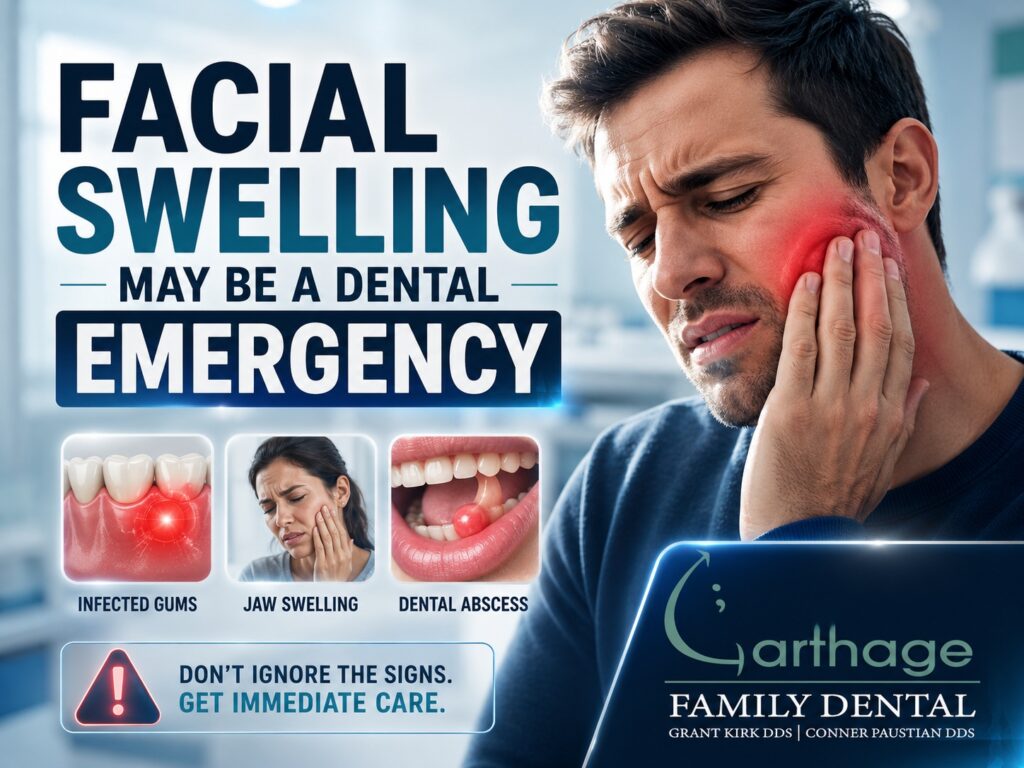
Swelling is one of the clearest signs that something serious may be happening inside the mouth. A swelling tooth emergency can develop rapidly, especially when infection is involved.
Common causes include:
- Dental abscesses
- Gum infections
- Impacted teeth
- Advanced decay
- Trauma to the tooth or jaw
Swelling may begin near the gums and spread into the cheeks, jawline, or even the neck. Some people also notice fever, bad breath, tenderness, or difficulty opening the mouth comfortably.
These signs of dental infection should never be ignored, as oral infections can spread beyond the tooth itself. In severe cases, infection may affect surrounding tissue and lead to serious health complications.
If facial swelling appears suddenly or continues increasing, immediate dental attention is necessary.
Broken or Knocked-Out Teeth Need Fast Treatment
Accidents happen unexpectedly. A fall during sports practice, biting into hard food, or even a minor vehicle accident can lead to dental trauma. Fast action is critical because damaged teeth are often time-sensitive emergencies.
A chipped tooth may seem minor at first, but deeper fractures can expose nerves and increase the risk of infection. Learn more about cracked or broken tooth emergency treatment and when immediate care may be necessary. A completely cracked tooth emergency may cause pain while chewing or sudden sensitivity.
A knocked-out tooth requires immediate care. If handled properly and treated quickly, the tooth may sometimes be saved.
Emergency situations involving trauma may include:
- Broken enamel
- Tooth fractures
- Cracked fillings or crowns
- Loose teeth
- Completely dislodged teeth
Prompt treatment for broken teeth helps reduce complications and may improve the chances of successfully restoring the tooth.
Signs of a Tooth Infection or Dental Abscess
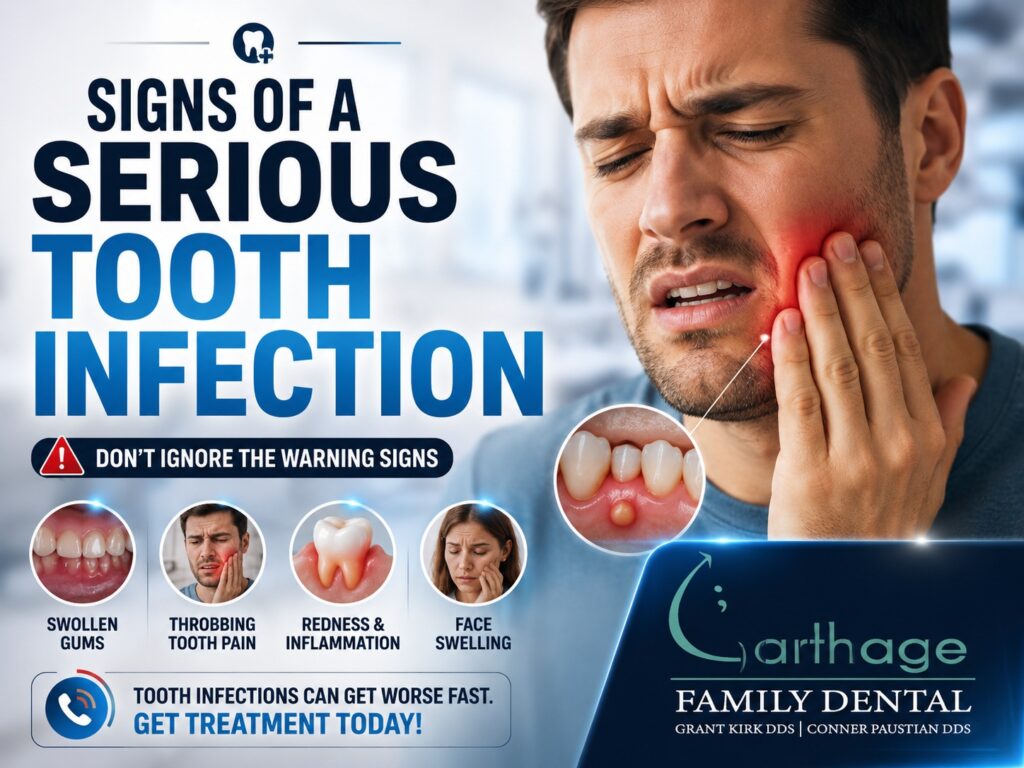
A dental abscess is one of the most serious oral health emergencies. It develops when bacteria infect the inner portion of a tooth or the surrounding gum tissue.
Common symptoms include:
- Severe throbbing pain
- Swollen gums and tooth pain
- Pus near the gums
- A bad taste in the mouth
- Facial swelling
- Fever
- Sensitivity to pressure
Many patients notice a small bump on the gums that resembles a pimple. This often indicates a draining infection beneath the tissue.
Without proper treatment for a dental abscess, the infection can spread deeper into the jaw and surrounding areas. Early care often includes drainage, antibiotics when necessary, and treatment such as a root canal treatment or extraction, depending on the condition of the tooth.
When Bleeding After a Dental Injury Is Serious
Minor gum irritation from flossing is usually not an emergency. However, bleeding caused by trauma or injury may require urgent attention.
You should contact a dental office immediately if:
- Bleeding continues after applying pressure
- A tooth becomes loose
- The gums tear after impact
- There is swelling or severe pain
- Blood appears around a damaged tooth
Sports injuries, playground falls, and accidental impacts often damage both teeth and soft tissues. Immediate dental trauma treatment helps reduce the risk of infection and supports proper healing.
Persistent bleeding combined with swelling or tooth movement should never be ignored.
Can You Wait to Treat a Dental Emergency?
Some people postpone treatment because work schedules, school responsibilities, or weekend plans feel more urgent than a dental appointment. Unfortunately, dental emergencies rarely improve without professional care.
Waiting too long may lead to:
- More severe pain
- Infection spread
- Tooth loss
- Bone damage
- More complex treatment later
Even small problems can worsen quickly. A minor crack may become a deeper fracture. Mild sensitivity may develop into a severe infection. What starts as occasional discomfort may eventually require an emergency tooth extraction.
Early treatment often means simpler procedures, faster recovery, and better long-term outcomes.
When to Call an Emergency Dentist in Carthage
It is important to contact a dental office immediately if you experience:
- Severe dental pain
- Facial swelling
- Fever with tooth pain
- A knocked-out tooth
- A cracked or broken tooth
- Uncontrolled bleeding
- Signs of infection
- Difficulty chewing or swallowing
Many patients seeking urgent dental care in Carthage are unsure whether their symptoms are serious enough. In general, if pain disrupts normal daily activities or symptoms continue worsening, it is best to seek professional evaluation.
A same-day emergency dental appointment may help relieve discomfort, prevent the progression of infection, and improve the chances of saving the affected tooth.
How Emergency Dental Care Helps Protect Your Oral Health
Emergency treatment focuses on more than pain relief alone. Immediate dental care also protects surrounding teeth, gums, and bone structure.
Depending on the situation, treatment may include:
- Infection control
- Temporary restorations
- Tooth stabilization
- Drainage of abscesses
- Dental crown placement
- Root canal therapy
- Tooth extraction
- Restorative dentistry procedures
Fast care may also reduce the need for more extensive procedures later.
An untreated infection or damaged tooth can affect speaking, eating, sleeping, and overall quality of life. Seeking help early supports both oral and overall health.
What to Expect During an Emergency Dental Visit
Many patients feel anxious before an emergency dental appointment because they do not know what to expect. The first goal is always to identify the cause of pain and stabilize the problem.
An emergency visit may include:
- A complete oral examination
- Digital X-rays
- Pain assessment
- Infection evaluation
- Discussion of treatment options
Treatment depends on the specific condition. Some patients may need immediate care, while others receive temporary relief followed by a future procedure.
The dental team may recommend:
- A filling
- A crown
- Root canal therapy
- Drainage of infection
- Tooth removal
- Follow-up restorative treatment
In many cases, a same-day dental appointment can provide significant relief and prevent complications from becoming worse.
Protect Your Smile Before the Problem Gets Worse
Dental emergencies rarely resolve on their own. Pain, swelling, bleeding, and damaged teeth are all signals that your mouth needs attention. Ignoring these symptoms may allow infection or structural damage to progress further.
At Family Dental of Carthage, our team provides prompt, compassionate care for patients experiencing sudden dental problems. Whether you are dealing with severe pain, a cracked tooth, swelling, or signs of infection, we are here to help restore comfort and protect your oral health.
Recognizing the warning signs of a dental emergency can make a major difference in protecting your teeth and overall health. Severe pain, swelling, infection, and dental injuries should never be ignored or delayed. Seeking professional care early often leads to faster relief, fewer complications, and better long-term outcomes for your smile.
Questions People Ask About Emergency Dental Care
How do I know if my tooth pain is an emergency?
Pain that is severe, constant, throbbing, or accompanied by swelling may indicate infection or nerve damage. Tooth pain that disrupts sleep or chewing should be evaluated quickly.
Can a dental infection become dangerous?
Yes. Untreated oral infections may spread into the surrounding tissue, the jaw, or other parts of the body. Fever, facial swelling, and difficulty swallowing require immediate attention.
Should I go to the ER for a dental emergency?
Hospital emergency rooms can help manage severe swelling, bleeding, or trauma involving breathing difficulties. Most dental emergencies still require follow-up care from a dentist afterward.
What should I do if my tooth gets knocked out?
Handle the tooth by the crown rather than the root. Keeping the tooth moist and seeking immediate dental treatment improves the chances of saving it.
How quickly should a broken tooth be treated?
A broken or cracked tooth should be examined as soon as possible. Delaying care may increase pain, worsen fractures, and raise the risk of infection or tooth loss.