2337 Fair Lawn Dr. Suite B 64836 Carthage, MO

Dental implants offer a solution for people who wish to have the smile they’ve always wanted and enhance their quality of life. You no longer have to rely solely on dentures and bridges for replacing missing teeth. Implants can provide you with the longest-lasting alternative, with the most natural results possible. Like any surgical procedure, endosseous implants require adequate recovery time and attention to promote efficient healing. If you are considering dental implants, be prepared to understand what the healing process entails.
Through this article, we hope to help you manage the recovery process with the tips below, and make the healing process as swift as possible. Whether you’re located in Carthage or nearby, here’s all you’ll need to know to make your dental implant recovery a breeze!
Dental Implant Recovery Timeline: What to Expect
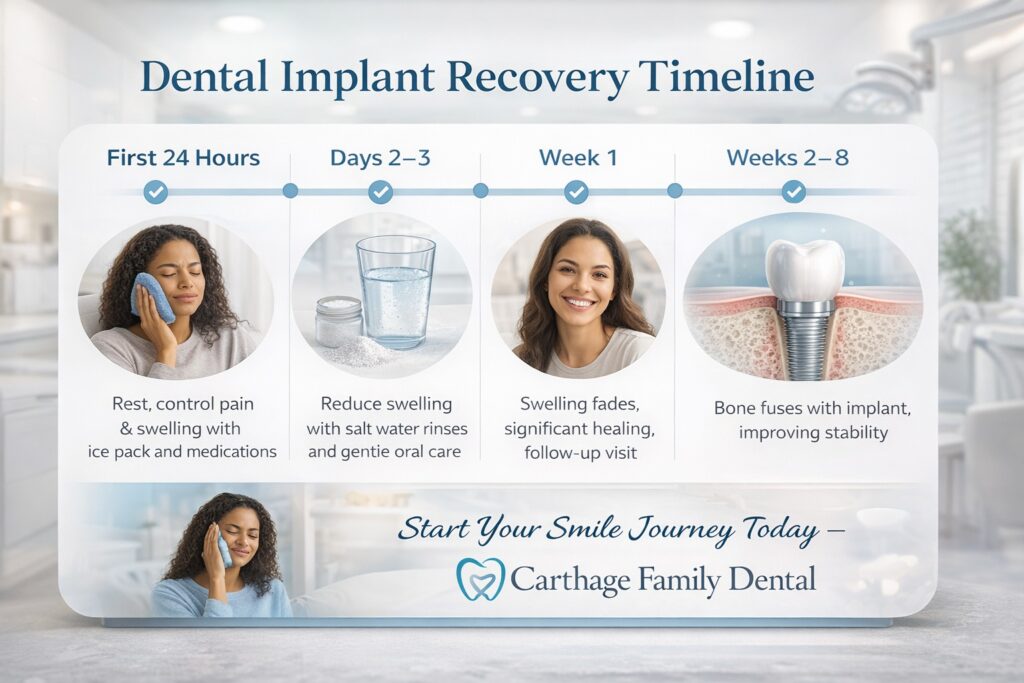
A clear understanding of what to expect throughout your dental implant recovery will greatly help ensure a successful healing period. Below, each stage of your recovery will be discussed in detail, from the first 24 hours after your surgery through the aftercare stages that follow.
Video by Smile Now Dentures & Implants. Learn what to expect during dental implant recovery, from early healing to full osseointegration and long-term results.
1. First 24 Hours: Immediate Aftercare
Following your dental implant procedure, the first 24 hours are vital for rapid healing. In these early stages, swelling and sensitivity may occur around your dental implant site. To manage your pain and swelling effectively, be sure to take your prescribed pain medication as instructed. You can also reduce your swelling by applying a cold compress or ice pack to the affected area for 15-20 minute intervals throughout the first day. Any strenuous exercise or physical activity should be avoided, as the priority at this point is to rest the surrounding area to promote a quicker healing process.
It is important to watch what you are consuming. Consume a soft-food diet and avoid hard or hot foods, which could damage your dental implants in Carthage. These guidelines will help prevent an unsuccessful procedure.
2. Day 2 – 3: Managing the Swelling and Pain
By day 2 or 3, you will probably still be somewhat sore, but you will likely have less pain. The swelling should be decreasing, and you may notice the bruising is fading. If you were given pain medication at the time of the surgery, continue to take it as prescribed. You should begin adding warm salt water rinses to your daily routine, which will help speed up healing.
At this time, it is still very important to adhere to your implant dentist’s aftercare instructions. Keeping the surgical site clean and ensuring the toothbrush does not brush over the implant are necessary to prevent common oral infections. A soft toothbrush may be used to clean the rest of your mouth.
3. Week 1: Keeping Track of Your Healing Process
By the end of week 1, you should already notice a difference in swelling and pain. Many patients are already back to normal activities after a week, though you may want to be careful when eating chewy and hard foods.
This first week is an excellent time for a checkup with your implant dentist at Carthage Family Dental. You want to make sure your implants are healing properly and that you haven’t developed an infection or implant failure. Your dentist will tell you how long you have to wait until you are allowed to eat again!
4. Week 2 to Month 2: Getting More Stable
At about weeks 2-3, you will want to get used to less swelling, and your healing should be a bit slower. Though you may not always be able to eat solid food at this time, the swelling should continue to decrease significantly. By 2 months, your implants should be osseointegrated (fused with the bone). This is a primary reason endosseous implants work so well: the more stable your implants are, the better the results you will have. It’s important to know that this process is slow and can take 3-6 months, although many factors affect healing time.
Long-Term Care for Your Dental Implants
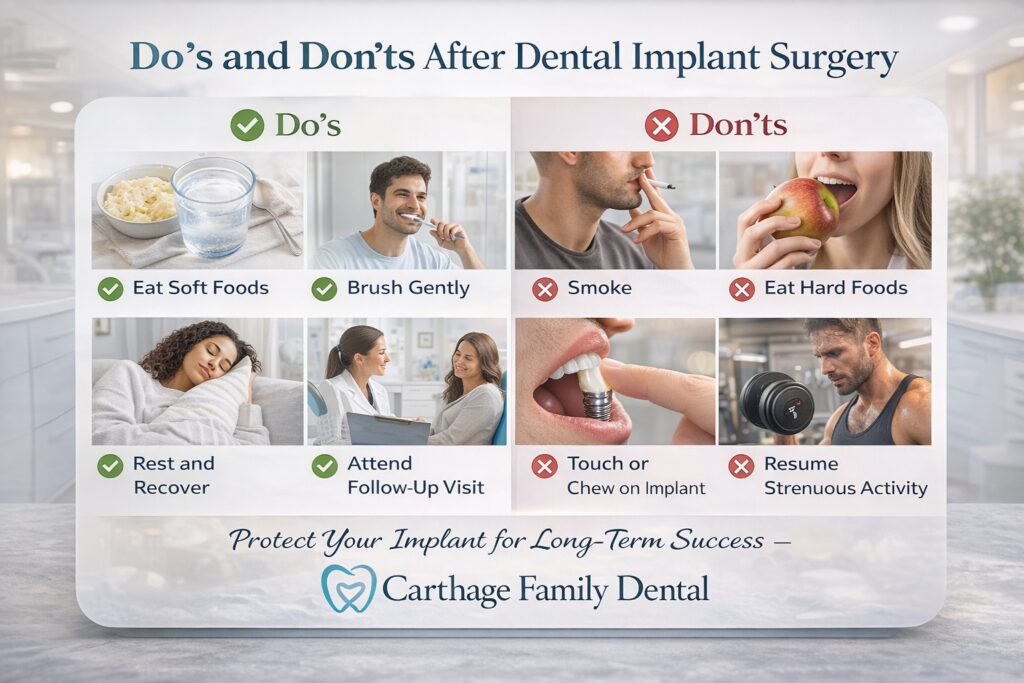
Once your dental implants have successfully bonded to the bone in your jaw, it’s important to care for them to ensure they last as long as possible. There are a few steps you can take to ensure your endosseous implants remain in excellent condition for many years.
- Brush and Floss Every Day: Like your natural teeth, your implants benefit from regular, twice-daily brushing and flossing. This will help prevent plaque buildup and keep the gum tissue around your implants healthy.
- Make Regular Appointments with Your Dentist: Your dentist can keep an eye on the health of your implants to ensure that they are still firm and not experiencing inflammation or other problems.
- Avoid Chewing on Hard Objects: This includes ice cubes, chewing on the ends of pens, and sucking on hard candies. These things will damage both your natural teeth and implants. Instead, focus on softer foods.
- Wear a Mouthguard If You Grind Your Teeth: If you grind your teeth at night, ask your implant dentist whether a night guard would help protect your implants from the pressure of grinding.
With all of these simple dental implant care tips, you can ensure that your implants will function correctly and your smile will look fantastic for many years to come.
Keeping Your Smile in Shape: Regular Check-ups
Part of the post-operative care for endosseous implants requires regular visits with your implant dentist to check the position of the implants and ensure the surrounding tissue stays healthy. It is crucial for implants that the gum tissue and bone around the implants remain stable.
Carthage Family Dental focuses on continuing care, and it is important to have your implants checked regularly to ensure that they remain in good working order. Your dental team will be able to answer any questions you have about continuing care while you recover.
Ensuring Lasting Results with Proper Care
The process of recovering from endosseous implants may take time and patience, but with the right care and attention to the prescribed healing process, you’ll be able to show off and feel the difference in your smile. Following the timeline set out and being meticulous about your aftercare and follow-up appointments will ensure the best outcome.
Are you considering dental implants, or would you like to learn more about how they can work for you? Don’t hesitate to call us to make an appointment for a consultation at Carthage Family Dental. Learn what the process of recovery from the implant procedure looks like.
Questions People Ask About Dental Implants
How long will it take for my dental implants to heal?
It generally takes 3-6 months for dental implants to fully integrate into the jawbone. Healing times can vary depending on factors such as bone density and overall health.
Can I eat normally after getting dental implants?
After the first few days of recovery, you can gradually introduce soft foods into your diet. Avoid hard, crunchy foods until you’ve fully healed and your implants are securely in place.
Will I experience pain after dental implant surgery?
Some discomfort and swelling are normal after dental implant surgery. Pain usually subsides within a few days, and any residual discomfort can be managed with prescribed medications.
How should I care for my dental implants during recovery?
Maintain excellent oral hygiene, use saltwater rinses, and avoid hard foods. You should also attend any follow-up appointments with your implant dentist to ensure proper healing.
Are dental implants in Carthage permanent?
Dental implants are designed to be long-lasting. With proper care and regular check-ups, they can last for many years, providing a stable, functional replacement for missing teeth.
Can smoking affect the healing process after dental implant surgery?
Yes, smoking can interfere with the healing process by reducing blood flow to the gums and impairing bone integration. It’s recommended to avoid smoking during the recovery period.