2337 Fair Lawn Dr. Suite B 64836 Carthage, MO

A missing tooth is more than just a concern for your smile. In reality, your jawbone needs stimulation from the roots of your teeth to remain healthy. Without this stimulation, your jawbone will begin to shrink. This can cause a gradual change in facial contours, making the cheeks or lips appear sunken.
While many people believe that a missing tooth is merely a cosmetic problem, the truth is that its consequences are far-reaching. Today, there are new ways of replacing teeth that not only fill the space but also preserve the underlying bone structure. This is why many patients ask about dental implants in Carthage when they seek a long-term solution.
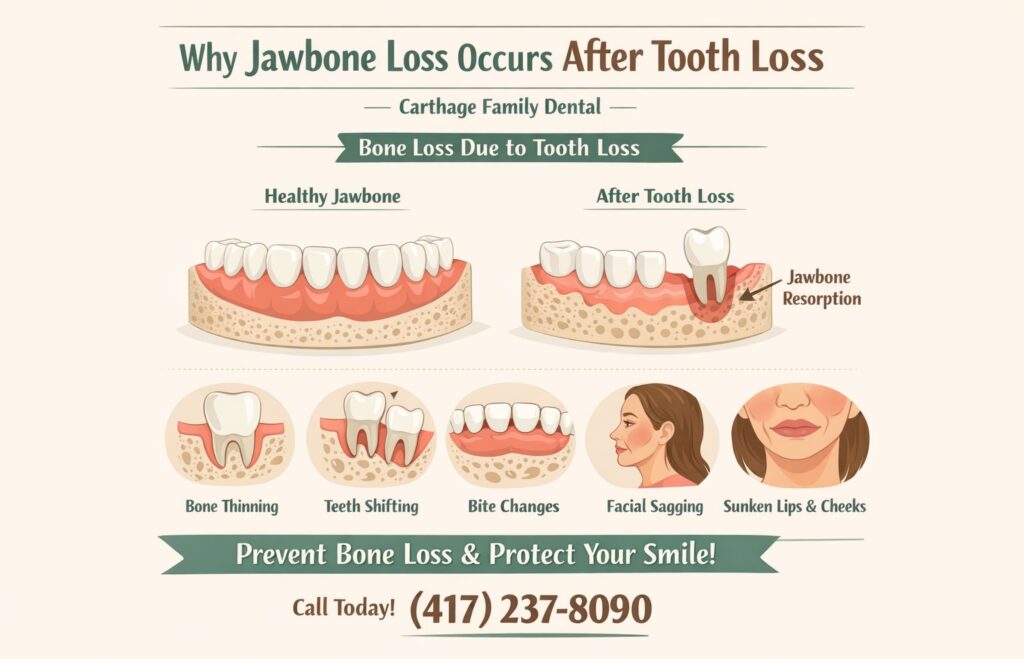
Why Jawbone Loss Occurs After Tooth Loss
Your jawbone is living tissue. It remains strong because normal functions, such as eating, send signals from the roots of your teeth to stimulate bone cells. When a tooth is lost, the stimulation stops.
As a result, your body perceives the jawbone as no longer needed and initiates a process called resorption. This may result in:
- The jawbone is becoming thinner
- Teeth are moving in the surrounding area
- Bite alignment changing
- Early signs of facial aging
- Loss of support for your lips and cheeks
This can occur even if you lose just one tooth. The effect will eventually be noticeable in photographs, mirrors, and even your glasses.
How Modern Tooth Replacement Helps Bone Health
Conventional tooth replacement, such as a bridge or removable denture, is designed to restore beauty and function. But it rests on top of the gum line and does not replace the underlying root.
Unlike them, dental implants in Carthage are different. They are placed directly into the jawbone by an implant dentist, where they act as an artificial root. As the implant integrates with the bone, it helps preserve the stimulation the body needs.
This process helps the bone stay healthy and strong rather than shrinking away. In other words, tooth replacement is more than just replacing a tooth; it is a way to preserve the foundation that supports your facial structure.
The Relation Between Jaw Bone and Facial Features
Your facial features are supported in part by your bones. Your jawbone is a skeletal structure that supports your skin, muscles, and other tissues. As your bone mass diminishes, these tissues will no longer have anything to hold onto. Some of the common visual manifestations of bone loss include the following:
- A sunken area around the mouth
- Early appearance of wrinkles around the mouth
- Thinness of the lower facial profile
- Reduced the distance between the nose and the chin
- Loss of definition of the jawline.
What Makes Root-Based Restoration Different
The implant dentist will insert a small post into the jawbone where the missing root used to be. The jawbone will fuse to the post over time in a process called osseointegration. This will allow the artificial tooth to function like a natural tooth.
The bone will accept the post as a support and will therefore continue to renew itself as it normally would. This helps maintain the facial structure.
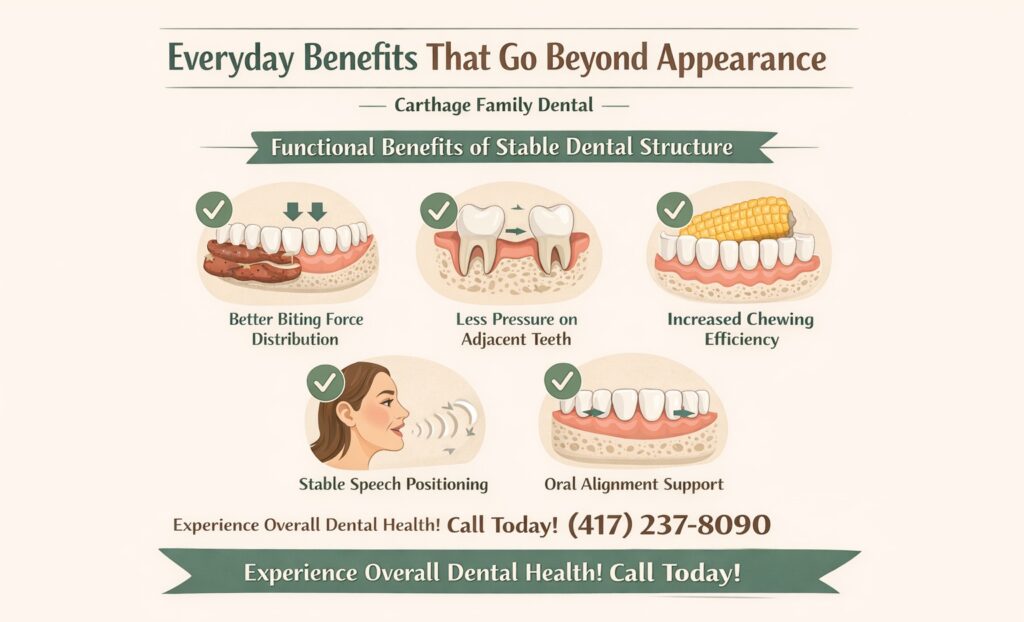
Everyday Benefits That Go Beyond Appearance
While people tend to concentrate on the appearance of their smile, the functional benefits of dental structure stability are also important in everyday life. Bone strength is essential for speaking, chewing, and overall oral health.
The functional benefits of dental structure stability include:
- Better distribution of biting force
- Less pressure on adjacent teeth
- Increased efficiency of chewing
- Stable speech positioning
- Oral alignment support
These benefits are important whether you are enjoying barbecue at a community event, socializing with your neighbors around the historic square, or simply enjoying a meal at home.
How to Recognize Bone Loss Signs
Bone changes do not necessarily result in pain. Most people are only aware of them once noticeable changes have occurred. It is possible to avoid further bone loss if changes are identified before they become serious.
Look for these symptoms:
- Loose-fitting dentures
- Teeth that are shifting out of place
- Changes in the way the bite fits together
- Facial profile appears slightly different in photographs
- Pockets forming around areas where teeth are missing
If any of these symptoms occur, it can be determined if there are any underlying changes in the bone.
When Timing Matters for Preservation
The sooner a missing tooth is replaced, the simpler it is to preserve the bone structure. Bone loss can begin as early as a few months after a tooth is lost, though this varies from person to person.
Replacing a tooth as soon as possible is important for:
- Preserving natural bone height
- Sustaining space between teeth
- Preventing adjacent teeth from shifting
- Distributing equal forces during chewing
For many patients researching tooth replacement options, this timeline is an important factor in treatment considerations.
How Placement Planning Ensures Facial Balance
The key to successful results is planning. An implant dentist examines bone quality, gum health, and biting force before making a recommendation. Imaging technology enables detailed analysis of placement angles and depth.
This helps ensure that the dental restoration not only replaces the missing tooth area but also the bone structure. The aim is balance, which appears natural and supports oral stability rather than just filling the gap.
Some patients seeking dental implants in Carthage are surprised to learn that planning is as important as placement. The base determines the success of bone support.
A Stronger Foundation for Your Smile
Protecting your jawbone is about more than replacing teeth. It is about maintaining the foundation that supports your smile, bite, and overall oral health. Today, there are ways to replace missing teeth while maintaining bone strength and health. If you are interested in learning whether this is an option that would be good for you, contact us at Carthage Family Dental. We’re located at an easily accessible stop on public transportation.
We will assess your dental situation and walk you through what you need to do next. Give us a call to schedule an appointment as soon as possible. This could be an important step toward protecting the foundation of your smile for years to come.
Questions People Ask About Dental Implants
1. How do implants actually stop bone shrinkage?
They replace the missing tooth root and transmit chewing pressure into the jawbone. That stimulation signals bone cells to stay active. Without that signal, the body removes unused bone. By restoring function at the root level, implants help maintain normal bone renewal and prevent structural decline.
2. Can facial shape really change after tooth loss?
Yes. The jawbone supports facial tissues. When bone volume decreases, cheeks and lips lose support and can appear sunken. This can subtly change profile lines and jaw definition. Replacing missing teeth early helps preserve the structure that maintains natural facial proportions.
3. Is bone loss noticeable right away?
Usually not. The process is gradual and painless. Many people only notice changes months or years later when comparing photos or seeing differences in how their bite feels. Early evaluation after tooth loss helps identify changes before they become more pronounced.
4. Are implants only for people missing many teeth?
No. They can replace a single missing tooth, several teeth, or even support full restorations. Treating a single missing tooth remains important because bone loss can occur at that site, affecting nearby teeth and the jaw structure if left unaddressed.
5. Does age affect whether someone can receive implants?
Age alone does not determine eligibility. Bone health, gum condition, and overall oral status matter more. Many adults in their 60s or 70s successfully receive implants when their oral health supports it. A clinical evaluation determines whether placement is appropriate.
6. How long does bone preservation last with implants?
When properly maintained with good oral care and routine checkups, implants can support bone stability for many years. The key factor is continued stimulation of the jawbone through normal chewing forces, which helps the bone remain active and structurally sound.